

“I really didn’t know what I was doing when I made it. I just jumped off a cliff and hoped somebody would catch me.” – (Director Miguel Arteta, c. 2000)
The people we grow up with hold a pretty special place in our hearts. It doesn’t matter whether or not there is a constant flow of contact going on — whenever you see that certain person from your childhood, you’re taken right back to that moment. This probably stems from the fact that you’re so vulnerable during those formative years; but, as adults, most of us move on, develop new friendships, and spend time thinking about what’s coming next.
But not all of us.
Chuck and Buck tells the story of Buck, who — after losing his mom — reaches out to a childhood friend he hasn’t seen or spoken to in years, Charlie (or as he knew him, Chuck). Charlie comes back home for the funeral of Buck’s mom, and suddenly finds Buck is very emotionally attached to him.
Buck is a character of clear arrested development. While Charlie has clearly moved on from the games of experimentation that they played as horny 11 year old boys, Buck still feels a certain longing for those days. This longing stems so deep, in fact, that he follows Charlie back out to Los Angeles and begins inserting himself back into his life, much to the Charlie’s chagrin. Buck is determined to have things the way they used to be, and wants to prove once and for all that what existed between Charlie and himself is still there.
“I’m not the typical heterosexual white guy, and that really is the dominant paradigm in the world of TV and movies. I feel like it’s my job to provide an alternate type of story or protagonist. It makes me feel like I’m not completely crazy.” – (Writer Mike White on his approach to writing characters, c. 2013)
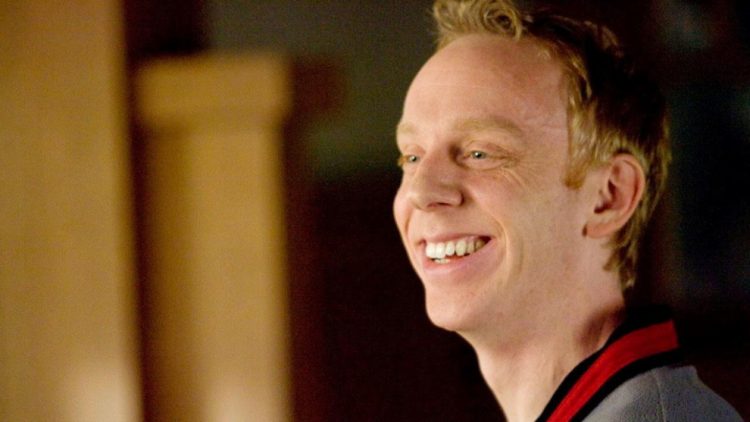
Buck, played wonderfully here by Mike White (Enlightened), who also penned the screenplay of the film, is a fascinating character study. In the hands of certain actors, Buck could easily be conveyed merely as a delusional stalker, who refuses to take no for an answer to his advances. But there’s something within the deep rooting of Buck that actually has the audience rooting for him.
Buck may have his issues clearly, but you sense very little malice or hostility than one would typically expect in a film with this plot. There are hints of obvious manipulation (wanting to break up Charlie and his girlfriend) and selfishness, but it’s the charm in which White plays Buck that adds a sense of realism to the character that would be lost otherwise. The character is so complex here, with a vast amounts of motivations that all link to one central motivation, that you truly do find yourself sympathizing with him, in spite of his faults and behavior.
The supporting cast (with the exception of Charlie), doesn’t typically scoff their noses at Buck or his social shortcomings. Even Charlie’s girlfriend attempts to help Buck out with all of his separation issues. Buck particularly forms a bond with a box office manager-turned-director, Beverly Franco (played by Lupe Ontiveros). When Buck writes a play that is reminiscent of the plays he put on in his backyard with Charlie, she takes Buck under her wing. What results is a relationship that mirrors one that Buck may feel at a loss for, with the recent passing of his mother.
The humor in the film never quite hits you over the head, but instead sneaks up on you. The laughs all come from moments that are the most uncomfortable. Everything happens in the most subtle and organic way. It is not your standard ‘set-up-punchline’ sort of comedy. The humor comes from the situations the characters are present in, so that nothing feels too overly contrived.
Aesthetically speaking, Chuck and Buck was shot on DV (Digital Video), utilizing what was a new and unconventional format at the time. This may have been a financial choice, but it supports the artistic integrity of the film beautifully. Here you have a character, Buck, who is so isolated from the world, that it is only after his mother’s death that he finds himself having to branch out on his own and embrace the world for the first time. The way the film is shot actually gives way to this intimacy, as you feel like you’re up close and personal in Buck’s life. It is as if this is a well-acted home movie, not a motion picture.
“I’m going to treat this as a story we’re telling with images, I don’t even want to know what camera we’re using. Part of the drive to use DV was to have technology play less of a part in the making of the movie. I wanted the emphasis to be on the performances, character and story. And it was great to have these 5-pound plastic things on the set that no one took seriously because it did put the emphasis on the performances.’”– (Director Miguel Arteta, c. 2000, on using the thriving format)
One moment of the film that really shows Buck trying to connect with his childhood has him hanging out with one of the child actors in a play he had written. You get a strong sense that this is a man who just doesn’t want to grow up yet, and is going to do whatever he can to cling to the past — even if it involves putting this young child in danger (as he later does).
Chuck and Buck is a very strange, very dark, and ultimately compelling story of having to grow up way after everybody else already has. This is all about accepting the past, embracing your own future, and discovering your true inner Buck.