


“The thing writers are scared about is that Hollywood is going to defang their story and put a happy ending on something that wasn’t happy. In fact, what happened with Election was that a darker ending got put on my material.” – Tom Perrotta, novelist of Election, the book on which the film is based on, recalls.
Making a film is never easy. Making a comedy is even trickier. So many elements have to go right, with all of the stars aligning, seeing you through the treacherous danger zone of filmmaking, where whatever can go wrong will. But there are few things that are more trivializing than attempting to make a dark comedy.
It can all go horribly south very quickly. One moment, you have characters that are joking and laughing, and everything seems fine. It seems like your standard comedy. But then, things take a nasty left turn. What’s so important about this left turn is that it must be in the hands of a director who knows how to execute the turn properly. If not, it can go from being a humorous dark comedy to a bad-taste, foaming-at-the-mouth trainwreck.
Election, Alexander Payne’s sophomore effort, may be one of the films that can best describe this. The whole time you’re watching it, you feel a tingle in your arm. You want to cover your eyes, but you don’t want to miss anything. You find yourself cringing, laughing, basically going through all of the human emotions, short of openly sobbing. There are few films that dare to go down the path that Election goes down. It’s not the path of how things SHOULD be; It’s just the way things really are.
I mean, I don’t really look at the film as being necessarily satirical. That’s something other people have called it. I just see it as this human landscape. – Alexander Payne, circa 1999.
Election is a film told from 4 different perspectives. It’s told from the perspective of Jim McAlister, a high school teacher put in charge of the school’s student-body elections; Tracy Flick, the front-runner for the election, the sort of over achiever who doesn’t really have much of a true social life outside of academics; Paul Metzler, a former football player everybody loves, and quite possibly, the most likable, least conniving person in this entire film; and Tammy Metzler, Paul’s sister, who is only running to get back at her ex-girlfriend.
What makes Election so unique is that it’s not a typical high school movie by any means. Surely, there is drama, but it’s not your high school drama for the most part (okay, some of that high school drama still exists). It stems way deeper than that. It actually serves as a social commentary for the political climate. It just so happens to be set at a high school.
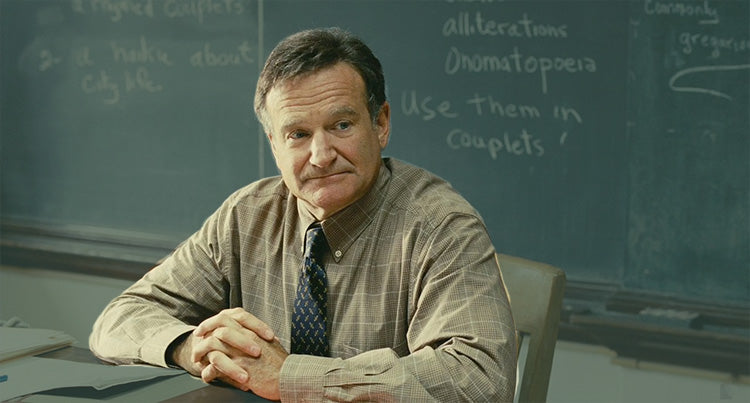
One scene in particular has Matthew Broderick having his students examine the difference between what is a moral dilemma and what is an ethical one. This is very meta, because as an audience member, the same thing is running through your mind as you watch the film unfold. You ask yourself, “Where are these character’s minds at? Do they actually mean well? Are they just looking out for themselves?” These are all questions that make up Election. A good film has you resonate with understand characters instantly. But an even better film will have you keep asking these questions throughout.
“I hate those [machine-made] characters. I don’t go to see those movies, and when I do… like when you can see that the script and the performance and the music and the editing are being manipulated in such a way for you to like that person, I leave the theater. I can’t take that.” – Alexander Payne, circa 1999.
For example, you could spend the entire film trying to dig deep to see if there’s any good to be found in Jim McAlister. Here is a guy who comes off as an average Joe. If your parents were to have met him on parent-teacher night, they would surely be enamored with him immediately. But this film exposes the dark side of people like that. You get a true sense of what really goes on in his mind. Every intention he has in the film is borderline (if not solely) self-serving. He wants to help the depressed former athlete out of his funk by helping him run for class president, only to ensure Tracy Flick doesn’t. Why? Because he has a personal vendetta against her, after she slept with his former colleague.
At the start of the film, you see Tracy Flick with her hand poised in the air, ready to jump all over a proposed question. Jim McAlister has his eyes darting all over the room, determined not to call on her. At the end of the film, you see the same scenario, with an entirely different Tracy Flick-type. It’s only at the end of the film that you realize this isn’t one teacher with something against one student. This is a teacher with something against an archetype.
And that is the sort of honest truth that is seemingly lacking from most movies in this day and age. But what the film does so brilliantly is display characters that are so unlikable, and yet at the same time, you keep coming back. Deep down, as much as every single one of these characters does something so wrong, you keep holding out hope and rooting for them. And that is the genius of Alexander Payne.