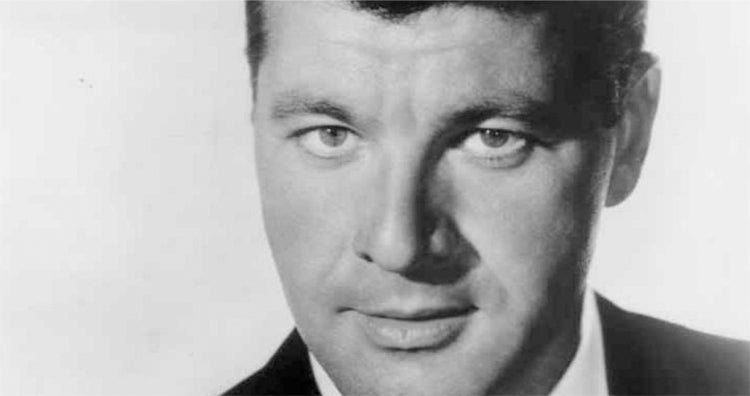

“If I get a thought, I find that the tangent to me is more interesting than the actual joke.”
Dick Shawn was once described by Johnny Carson as being a “Stream of Consciousness” performer. This was very much true. Watching Dick Shawn onstage, there was an electric air of unpredictability. There was much to be said for being in that moment, watching someone with the ability to go from something politically charged to downright absurd in just a matter of seconds. You almost got the sense that Dick Shawn didn’t know what he was going to do. Trying to describe what Dick Shawn did is sort of like trying to explain a beautiful work of art to someone who cannot see.
Richard Schleufand was born on December 1st, 1923 in Buffalo, New York. Growing up, he was accustomed to a very un-ordinary quiet and tense upbringing. “We had to look at each other all the time,” Shawn once said in an interview, of his upbringing. “Silence was a way of easing the tension. There was no intellectual discussion, no TV. You ate and left the table.”
As a student, his dream was to become a professional baseball player. After high school, he had a tryout with the Chicago White Sox, which resulted in a contract to play for them. However, he eventually wound up turning it down, once he became drafted, and had to serve those obligations. In fact, it was in the army that he had begun to discover his talent to make people laugh. “In the Army, I heard they needed replacements for the USO shows, so I tried out and they accepted me. I could always make people laugh.”
Following the army, Dick Shawn enrolled in the University of Miami. However, he soon after left, to further his pursuit to become a stand-up comedian. By this point, he had shortened his name from Schleufand to Shawn, and had scored a chance to be on Arthur Godfrey’s Talent Scouts. Despite not winning the competition, Dick Shawn took all of his talents that ranged from singing, dancing, impressions as well as his intuitive comic timing, and put together an act. He began performing in The Catskills. Despite being on an entirely separate wavelength than the standard set-up, punchline of those days, Dick Shawn finally began making a name for himself.
Throughout the 1960s, Dick Shawn appeared on seemingly every show on television from The Ed Sullivan Show to The Judy Garland Show to Perry Como’s Kraft Music Hall, and all else in between practically. If there was a show, Dick Shawn was on it. He had eventually secured a three picture deal for himself with 20th Century Fox. Things were going well with very memorable performances in It’s a Mad, Mad, Mad, Mad World and The Producers, the latter of which had him donning a Hitler mustache in the show-within-a-movie, “Springtime For Hitler.”
But it was his work in his stand-up act that really allowed him to run wild. His act is difficult to describe, if only because it was so difficult to peg. One moment, he’s singing and dancing. The next moment, he’s doing a reading of Othello. You just didn’t know with Dick. Case in point. In 1986, Dick Shawn was sitting on the dais for the Roast of Tommy Chong. Towards the end of his career, he became the closer for these type of roasts, basically because nobody would be able to follow him. So after a night that was full of filthy jokes that weren’t able to be broadcast on anything other than The Playboy Channel, Dick goes up onstage last. And how does he follow up a night that had already been exhausted of foul language and dirty jokes? By spitting up pea soup, so disgusted he was. He wiped it from his mouth and uttered “I’m sorry. It just seemed like the right thing to do.”
In 1977, Dick Shawn created a one-man show that he considered a personal career highlight, as he got to incorporate everything he did best into a one man show entitled The Second Greatest Entertainer in the Whole Wide World. As you entered the theater, you saw a large pile of newspapers just sitting onstage for the half hour preceding the show. Suddenly, Dick Shawn emerged from the newspapers. The 90 minutes that followed was one that audiences never would forget. So successful it was that he brought it back in the 1980s at The Canon Center in Beverly Hills, Los Angeles.
While his performance act in night clubs all across the country were certainly what got his foot in the door, when remembered (if at all) today, it’s for his work his co-starring roles he did in films. It’s so interesting, though, because Dick Shawn isn’t a name that comes up very often, yet there he was, at the forefront of it all. His style of humor and stylized comedy perhaps didn’t translate to film all that well, and that could be one reason why he’s not better known today. His act may be just one of those that is in that category of “you had to be there,” which is more of a live experience sort of act, as opposed to the more traditional Bob Hope approach to comedy of the time. Maybe he was an acquired taste, but for people who got to see him, it was a feeling unlike any other, being in the room with him, with him at the wheel, steering the ship.
April 17th, 1987, Dick Shawn was performing at the University of San Diego. The show was going well, and he was in the middle of performing a bit about leading the world after a nuclear bomb. Suddenly, he fell onto the stage, while the audience was convinced that it was all apart of his act. It wasn’t. Dick Shawn died of a heart attack while performing onstage, at the age of 63. But what Dick left behind is surely the work that should be admired for it’s original nature, creativity, and unpredictability.
The work that Dick Shawn had done both onstage and in film helped set the bar for a lot of the biting social commentary and self-referential absurdism that is so prominent in our culture today. And that’s why it’s important to pay tribute to Dick Shawn. He captured an essence of performance that has not been replicated either before or sense. There was an original air to him, and he remained both ahead of his time, and also fit right in, in the oddest of ways. Love him or hate him, you couldn’t take your eyes off of him.