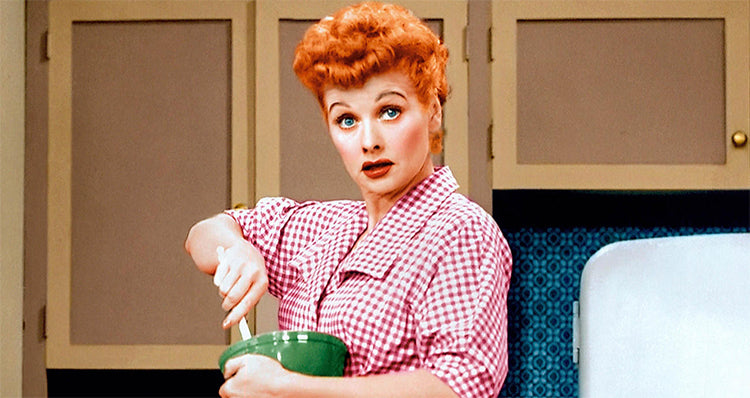

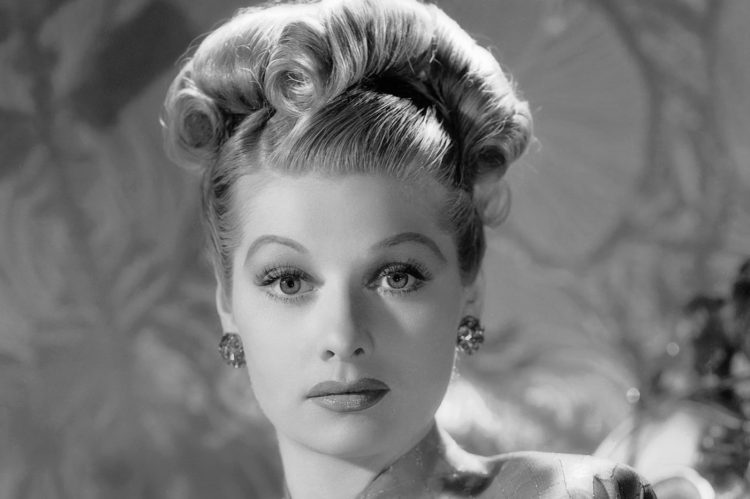
This week’s game changer was a powerhouse. She was the first woman to be the head of a television production company. She had 15 Emmy nominations and 4 wins. She paved the way for Mary Tyler Moore, Penny Marshall, Cybill Shepherd, and Robin Williams. She was the first woman to be pregnant on television in real life and as a part of her series. Her career survived communism and divorce when both of these things were very taboo. She has two stars on the Walk of Fame in Hollywood (one for TV, one for movies). This game changer was Lucille Ball.
The iconic redhead came from plain beginnings in Upstate New York. By the age of 12, she got her taste for performing when she auditioned for a chorus line that catered to Shriners. By 14, her mother sent her to John Murray Anderson School for the dramatic arts in New York City. Modeling helped to launch her career into movies. She earned the nickname “Queen of the B Movies” for appearing in so many minor productions.
Lucille Ball worked with the Three Stooges and the Marx Brothers, but her big break in comedy happened after she married her husband and was almost 40 years old. She wrote and performed in a radio gig, My Favorite Husband. This caught the attention of CBS. They wanted her to bring the show to television. Ball would only do it if her husband, Desi Arnaz, could join her. The network was concerned about Desi’s Cuban nationality. To prove them otherwise, the pair took their act out on the road in Vaudeville style. They won over audiences performing a bit where Lucy vied to appear in her husband’s show. This, in return, won over CBS. They created I Love Lucy, and it was the first television show to feature an interracial couple.
The show actually set the standards for later sitcoms. With Ball’s pregnancy, it was the first time an actress was able to acknowledge and write it in as part of her show. TV censors would only allow “is expecting” in to the episodes. The TV birth of the baby bested the televised 1952 presidential election of Dwight D. Eisenhower. The show ranked #1 in four of its six seasons. Ball credited the writers for much of the comedy, but her perfectionism to get the exact facial expression or the right gait for stomping grapes arguably is what made the show so funny. Watching Lucy sixty plus years later, trying to frantically wrap chocolates coming down a conveyor belt still ignites laughter today. The context as to why she was dealt task is completely secondary.
Ball’s career certainly had many hurdles. In the 1940s, she testified in court about her suspected ties with the communist party. J. Edgar Hoover, FBI director at the time and known communist headhunter, sided with the star, saying that I Love Lucy was one of his favorites. The comedienne also risked her career when she filed for divorce from Arnaz in 1960. Not only did she pull through, but she also bought out Arnaz in the production company that they started together, Desilu. During her reign as the first female TV executive, she greenlit Mission: Impossible and the groundbreaking Star Trek.
She sold Desilu in 1967 for $17 million, but she worked until the end. Her show is still syndicated today. She continues to be credited as a seminal influence on young comedians. If show business is the game, then Lucille Ball was show and business.