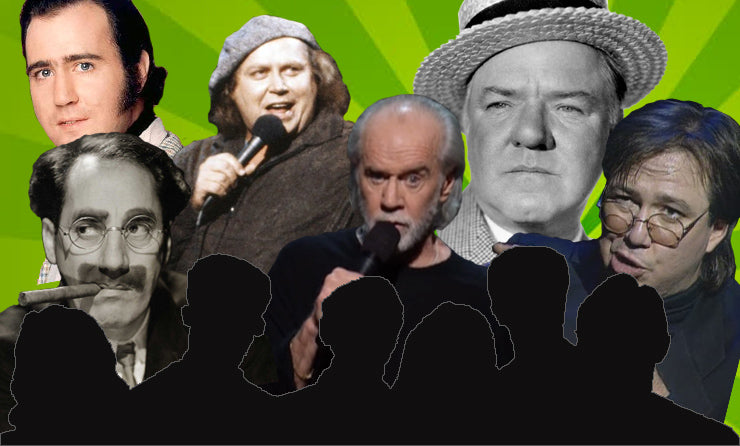

When you grow up with someone, it doesn’t matter if your father is George Carlin, or your brother is Sam Kinison. They are just George or Sam and so on. But there’s something special about them. It’s not because they’re talented. It’s because they are family. Only is it as you grow older that you start to see past that kinship connection.
To those of us who don’t have the experience of growing up with someone thrusted into that spotlight tinted lime, the first thing out of our mouths will most likely be “What was it like growing up with…?” But there’s no real way to answer that. There’s nothing to compare it to. It’s all they’ve known, and to you, it may seem exotic and life-changing, but to them, it’s just home.
We interviewed 7 family members of legendary comedians to talk sustaining the legacy after their death and how they go about doing so: The families of W.C. Fields, Groucho Marx, George Carlin, Andy Kaufman, Bill Hicks, and Sam Kinison.

RONALD J. FIELDS (Grandson of W.C. Fields)
“He was just a really funny guy. That’s the legacy I want him to go under. He was just a hilarious comedian.”
Ronald J. Fields had a pretty normal childhood. He was interested in getting his batting average over 100 (which he never did achieve) more than anything else. So it came as a surprise when, one day, he learned something that everybody else in the family had assumed he already knew.
“I was watching It’s a Gift, and I was laughing so hard that I had to leave the room just to catch my breath. And my sister follows me into the living room, and she goes ‘Are you okay?’ “Yeah, but that guy has to be the funniest man who ever lived.’ And she looks at me and says ‘You don’t know, do you?’ I ask ‘know what?’ ‘He’s your grandfather.’ ‘You’re kidding!’ I had no idea.”
This information was certainly cool, but it did little to shape his life in that moment. But upon his grandmother’s passing, he had gone into the previously “forbidden basement” when they were looking to sell her house.
“I went down to the basement and there I found this incredible trove of W.C. material. Everything. It was all in her basement, which was a dirt basement. And it was going back to 1898 when he first started. And photographs of him when he was 5 years old. And letters that chronicled his life, from just about every week, from 1898 to 1946. And I wanted to write a biography, because I wanted to expose the world to my writing abilities, but I said ‘Geez, this is him telling his own story.’ I’ll write the commentary, but I’m going to put down my ego and let his ego fly, because this is incredible material.”
In the late 1960s, early 1970s, there was a resurgence of two major comedy icons. The Marx Brothers and W.C. Fields. This had sustained their legacy, and all of a sudden, they were being touted and praised by a whole new generation, securing their place not just as funny comedians, but as legends.
“[At the time] I couldn’t figure out why W.C. was such an iconoclast to the iconoclastic generation that I grew up with. And now I think it just hit me. The idea of hating children and dogs was against all the principals of society, so they looked at him as a rebel.”
So what does the future hold for W.C. Fields? Aside from the re-release of W.C. Fields: By Himself in 2016, with a forward by Conan O’Brien, who refers to W.C. as “The funniest man who ever lived,” there are loads of stuff on the horizon. There is work on a new kids show that will incorporate old W.C. Fields clips, as well as work on a musical currently titled, AN HONEST MAN. But what keeps a comedian who has been dead for so long relevant today?
“His comedy is just not period. I think it’s relevant today because there’s pretentious people today. And he made fun of pretentious people. There’s power, and he speaks against power.”

ANDY MARX (Grandson of Groucho Marx)
“I would say he’s a comedy icon who made several iconic movies, iconic comedies. Some of the most iconic movies in the history of films.”
A lot of us were introduced to certain comedians and films by our parents while growing up. Andy Marx was certainly no exception. Some parents may introduce their kids to The Three Stooges, Saturday Night Live, or Abbott and Costello. However, it seemed that Andy’s parents had a particular comedy act in mind…
“I can remember one time, at some point I was pretty young, and my parents saying to me ‘Hey, come in and watch this movie on T.V.’ It was A Night at the Opera. That’s kinda my first memory of realizing that they had done stuff.”
“They,” of course, is referring to The Marx Brothers, or more specifically, Andy’s grandpa Groucho. As a kid, being the grandson of Groucho Marx wasn’t such a big deal as it may seem to be by today’s standards. By that time, You Bet Your Life was off the air, and Groucho had become a bit of a recluse and semi-retired.
But then, all of a sudden, in the early 1970s, there seemed to be a resurgence of The Marx Brothers. Once again, there was this crazed madness. They were everywhere.
“Before the resurgence, you couldn’t really see those movies anywhere. Their stuff wasn’t really available. So if it was on T.V., that would be pretty much it. So I think, probably when I was in high school, whenever one was on T.V., I would try to watch it.”
Along with this resurgence, Groucho Marx, now in his 80’s, had begin making the rounds all over again, appearing onstage at Carnegie Hall, The Dick Cavett Show, and just about every other show of the period.
“There’d be all kinds of people there who wanted to meet them, and half the time he didn’t know who they were. Not because he was out of it, there were a lot of people he just wasn’t sure what their place was in society.”
Now Andy Marx, just as his father Arthur had, turned to writing, and in doing so, has helped maintain the legacy of his grandfather. In 2014, Andy published his first novel.
“I wrote a novel that was published two years ago, and even though it was a novel, it was based on the lives of Groucho and Gus Kahn. And it was the world of Vaudeville and Tin Pan Alley and everything. It’s called Royalties. That was my fictionalized look at the two of them.”

KELLY CARLIN (Daughter of George Carlin)
“I have a really distinct memory of watching him on the Della Reese Show and understanding ‘Oh. Dad’s on T.V. That’s what he does.'”
Kelly Carlin, the only child of comedian George Carlin and his wife Brenda Carlin, was born on June 15th, 1963 in Dayton, Ohio. Soon, within the next couple of years, her father started garnering national attention as a stand-up comedian on television.
“There was a sense of all of the focus and the attention being on him, and because I was a cute little girl [when they were] meeting me and would give me some attention, you could tell the way people are around celebrities. There’s this feeling of ‘I’m just an afterthought here, that’s the main attraction.'”
Prior to her father’s death in 2008, Kelly Carlin had a maintained a pretty private life, not really doing much in the spotlight. Only after was she fully able to step out and share with the world her father’s legacy.
“Right after his death I knew that it was on my shoulders, as an only child, and that I wouldn’t trust anyone else with the job of maintaining his legacy. For the first few years, I could feel like ‘That’s my job.’ I can’t be him, and I never will, but these people need to say goodbye to him or at least to share how he changed their life, and that’s usually how they put it. I just knew I had to receive that.”
In the years since his death, Kelly Carlin has been able to not only share his legacy with others, but carve out one all her own as an author, storyteller, and radio personality. In 2012, she detailed her life in a solo show, A Carlin Home Companion, which she later adapted into a book.
“It was a way for me to say ‘Yes, he’s no longer here, but if you’re interested in what I’m doing and who I am and what my point of view is and my talents, this is what I do. And if not, that’s fine, too. But here’s a connection.’ And I knew that could introduce people to his legacy in a different way. They could see another aspect of George Carlin, because they only saw a small wedge of him, the part of him that was on a stage or in the limelight. But through my book and my show, they got to see the rest of George Carlin.”
And while her book may be subtitled “Growing up with George,” it is by no means a biography of her father. Her father is a secondary character to herself. It’s her story. These are her memories. At last, Kelly Carlin is no longer standing in the wings of Carnegie Hall. She finally gets to speak the voice all her own, and share her unique perspective on the world. She is ready to move onto the next chapter of her life. That being said, what’s next for the legacy of George Carlin?
“There is a little bit of a sense of closure [after the death of a parent], they do disappear, they do go away where life moves on in some way. But when you have a parent who’s an icon, they don’t really go away. So I had to manage my relationship with his publicness, while at the same time, that’s why I decided to donate his archives that I had to the National Comedy Center in Jamestown, New York, to preserve and exhibit and take care of them for posterity. So that felt really, really great, knowing that I put them in amazing safe hands. They’re building this incredible exhibit with all sorts of comedy. They’re going to have a Smithsonian type of archive that scholars of fans can go see his stuff and his hand written material and all kinds of memorabilia. And I could pass the baton on. I was ready to pass the baton on.”
As far as Kelly’s future? She is hosting her SiriusXM show, Carlin Corner, teaching online, as well as having a few ideas for her next book that she hopes to pursue. It’s kind of like what her and Paul Provenza always said when they were doing her solo-show. They come for the George; They stay for the Kelly.

MICHAEL KAUFMAN & CAROL KAUFMAN-KERMAN (Brother and Sister of Andy Kaufman)
He had the courage to have full commitment to what he did. It’s what everybody wants for themselves, whether they’re a performer or not.” – Michael Kaufman
Andy Kaufman was born on January 17th, 1949. Michael Kaufman was born on January 8th, 1951. Carol Kaufman-Kerman was born on January 16th, 1956. Carol is younger by 6 years and 364 days (as it hadn’t been a leap year). Now a story-teller in Chicago, she shares exactly how this had affected Andy’s life.
“My parents said ‘Andy, you have a little sister. She’s your birthday present.’ And I think about that now and he was 7 years old. Could you imagine being 7, you’re a boy, and you want the cowboy guns or you want the racing cars, or you want the neat-o space messaging thing? It must’ve been a little bit of a disappointment. But it wasn’t. It was actually was the most perfect present that he could have.”
At this time, Andy would spend all day up in his bedroom, putting on television shows for the camera that was in his wall. Finally, his parents put their foot down and told Andy that if he was going to perform, he had to get an audience.
“Truth be told, I don’t remember being in diapers, propped up and watching him. But I do remember later on that Andy and I would pretend there was a hidden camera downstairs in our den behind the gold burlap curtains, nestled between my dads bowling trophies set against the wood paneled walls. Some of our improvs I would see later in his TV specials.”
Since Andy’s 1984 death, he’s been the subject of documentaries, books, and even a major motion picture. In 2004, The Andy Kaufman Awards was started in New York. Michael Kaufman, now the face of the awards, reflects on this.
“I would give credit to my father. He was getting older, and he wanted his son to be remembered. So he went to George Shapiro [who had managed Andy]. My father was going to pay money to have a scholarship or have a chair somewhere, and then George had the idea for the award show. He already heard about what Caroline’s was doing in New York, and so that’s how that happened.”
The Andy Kaufman Awards, in turn, has become more than just a showcase for stand-up comedians. When you attend the award shows, you’re not going to see people standing on a stage talking about their life. You’re going to witness a different form of art.
“What started out as a father’s loving tribute to his son, wanting to help the world remember Andy, became something bigger than Andy and the Kaufman’s personal gratification. The Award became a safe haven for artists who marched to the beat of their own drum, like Andy. The Award encourages artists to continue with their commitment to themselves and their vision. How else are advancements to be made, or anything new to emerge, if everybody just gets as good or even a little better than what there has already been?”
For Carol Kaufman-Kerman, the legacy of her brother still has a bit of a spin to it. “Andy was always providing us with the novelty and joy from his life. And I used to remark that even though he was deceased, he would still give us joy and opportunities that we would never have.”

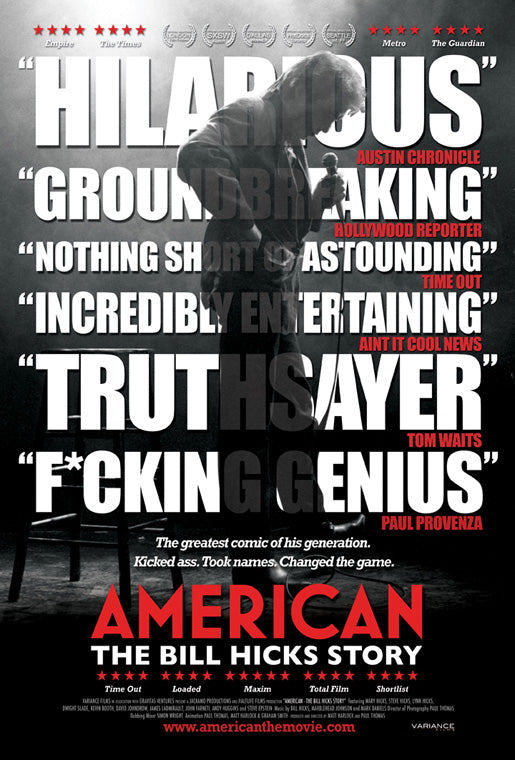
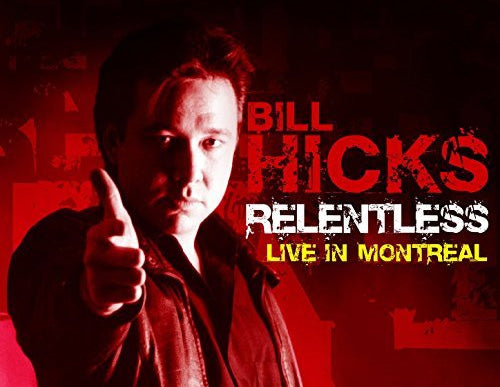
STEVE HICKS (Brother of Bill Hicks)
“I think Bill spoke to the bigger truths in life. They are always relevant. They’re never going to go out of style. Truth doesn’t go out of style. Quality doesn’t go out of style.”
Steve Hicks is the brother of Bill Hicks. Being 5 years older, Steve got to watch his brother’s material form right before his eyes, only he didn’t know it then…
“When I was still in the house in high school, Bill, who was maybe 12, 13 years old, and would slide jokes under my bedroom door. And I would write something. You know, I had no qualifications. I was barely a teenager myself. I would write ‘That’s funny,’ or ‘I don’t get it,’ or ‘What do you think about this?’ So that’s when it was really starting, but at the time, we didn’t know that. He was just passing jokes under my door.”
Around the age of 15, Bill and his high school friend begin performing at The Comedy Annex in Houston, the same place Sam Kinison had gotten his start.
“He said ‘Why don’t you go down there?’ So I went down there. Well, he was like headlining! He was like this star. And he was hilarious. And it all made sense to me, about him writing these jokes way back when.”
Since the passing of Bill Hicks in 1994, (after having spent more than half of his life onstage), in addition to securing his place as one of the greatest stand-ups of all time, he has become more appreciated by a whole new generation, thanks to YouTube.
“Youtube, for performers, has made the world a very, very, very small place. You can see somebody on there, and you can get it around the world. Bill has a fan base around him. It’s amazing how his legacy has grown.”
And needless to say, the way in which his fan base and popularity continues to grow to this day, there’s no sign of that stopping anytime in the foreseeable future.
“The way I look at it is all of this stuff is going to outlive every single one of us. So I think to myself ‘What do you want that legacy to be out there?’ And that’s how I think of it. ‘What will the fans find interesting?’”
Preserving the legacy of Bill Hicks is very much a family affair, though, between Steve, his sister Lynn, and their mother, Mary, (with Steve being sort of the curator over all of his brother’s performance videos).
“It’s me and my mother and sister, and we run everything by each other before we decide on anything. That’s the extent of our dynasty. One thing we are very protective about is how what we do with Bill gets shared. We aren’t in this for the money. We’re in this for the love of Bill and to promote, protect, and preserve his legacy out there.”

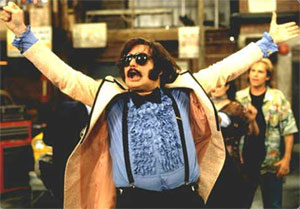
BILL KINISON (Brother of Sam Kinison)
“[Show Business] wasn’t on our radar. We grew up in the same projects as Richard Pryor, so believe me, getting into show-business was not even in your dreams.”
Sam Kinison and his brothers grew up in Peoria, Illinois in the 1960s. Their father was a preacher, and so naturally, that was what line of work they decided to go into.
“Sam had been a preacher for 7 years, and then he ended up in divorce. In our circles, Pentecostal, the worst thing that could happen to you if you were a preacher was to get a divorce. I told him then, ‘Why don’t you forget your brothers are preachers, your dad’s a preacher, your friends are preachers, and look down in your heart and find out what you want to do in life.’ I thought he’d take some time, he took about 3 seconds and he said ‘I always wanted to be a stand-up comedian.'”
And with that, Sam moved out to Houston where he got his start at The Comedy Annex, followed by The Comedy Store 2 years later, when his big break came in 1985, being featured on Rodney Dangerfield’s Young Comedian special on HBO.
“Within a week he signed a 4 record deal with Warner Brothers, a 4 special deal with HBO, I think 3 appearances on Saturday Night Live, a couple of appearances on David Letterman, and we set up a 40 city tour. And all of that was within a week after his HBO Young Comedians special came out with Rodney.”
All of a sudden, everybody knew who Sam Kinison was. He was everywhere. He became known for his wild rock-and-roll persona, both onstage and off, and talked about all taboos from religion to sex to AIDS.
“I think his style just came from preaching, and he had that ability to make anything funny. One of his first routines that people remembered was starving children. If you could make people laugh, making fun of starving children, you better be pretty funny. Or the ABCs on oral sex or homosexual necrophilia. These were things no one, I think except Sam, ever could’ve made them funny. But he was hilarious doing it. They would just laugh and not realize why they were laughing.”
Since his death, his legacy has only become more set in stone, with his act being able to transcend the elements of time, despite the times themselves having changed.
“You’ve got to remember, if Sam was starting out today, he’d never make it. Everything’s gotta be so politically correct and everything else. This guy coming on and talking about gays or women or church or politics or whatever in his style. He never would’ve made it.”
In life, his brother Sam was certainly considered to “live on the edge,” as part of his rock star persona. So, how can the legacy of someone so larger than life be possibly kept up with after he’s been physically gone for so long?
“I try to keep his name and his image out there because there’s a whole generation that don’t even know who he is. And so that’s what I try to do to keep up his legacy, is just keep making deals.”